About location
If an app records where you’ve been, doesn’t its maker know?
We don’t. It’s built so that we can’t. This page shows that in a form you can check for yourself.
-
We don’t watch where you are Nothing keeps watch over you. Your location is read only once, when you act.
-
Not used for ads or analytics No ads. No analytics tools. We don’t sell it to anyone either.
-
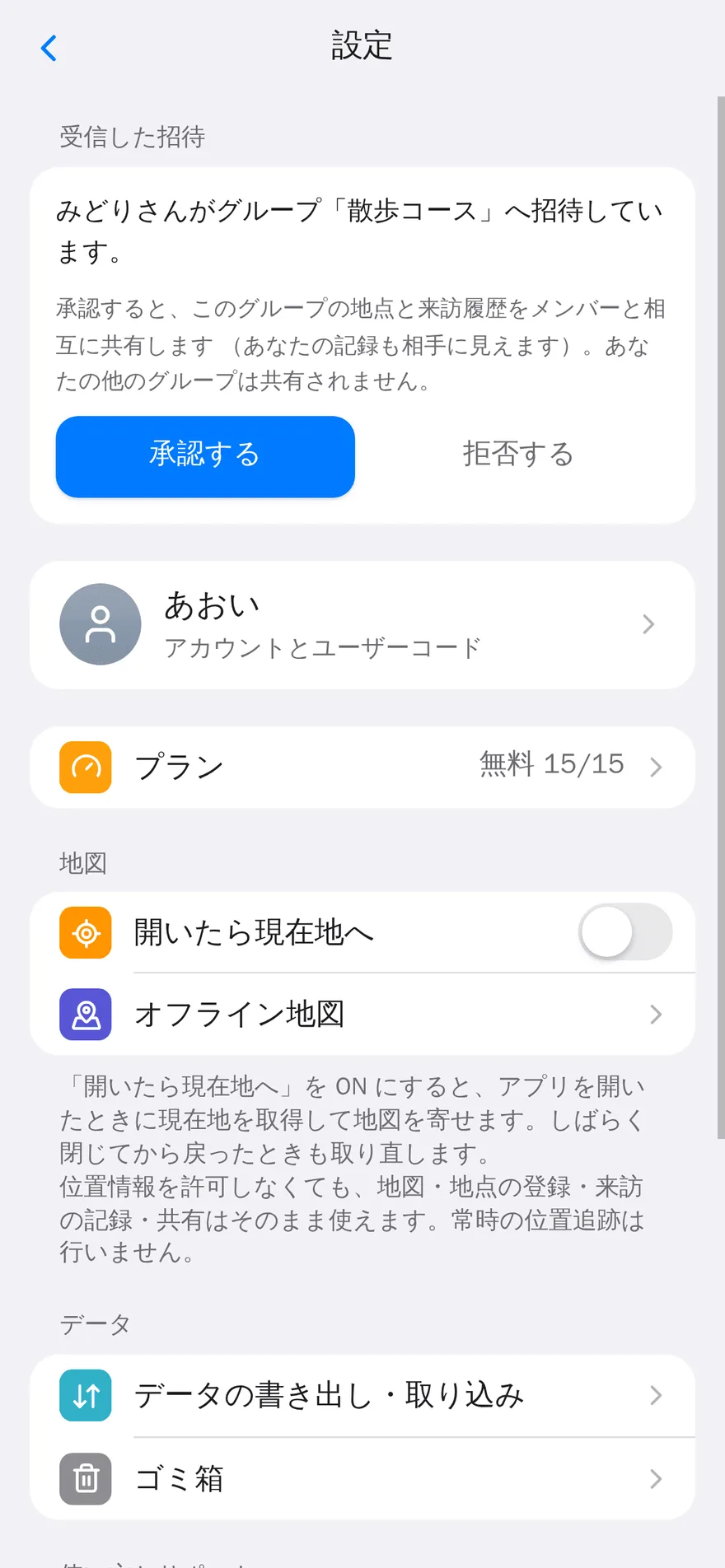
You can say no to “Allow location access?” and still use it It’s fine to decline. You just won’t see the distance to shops.
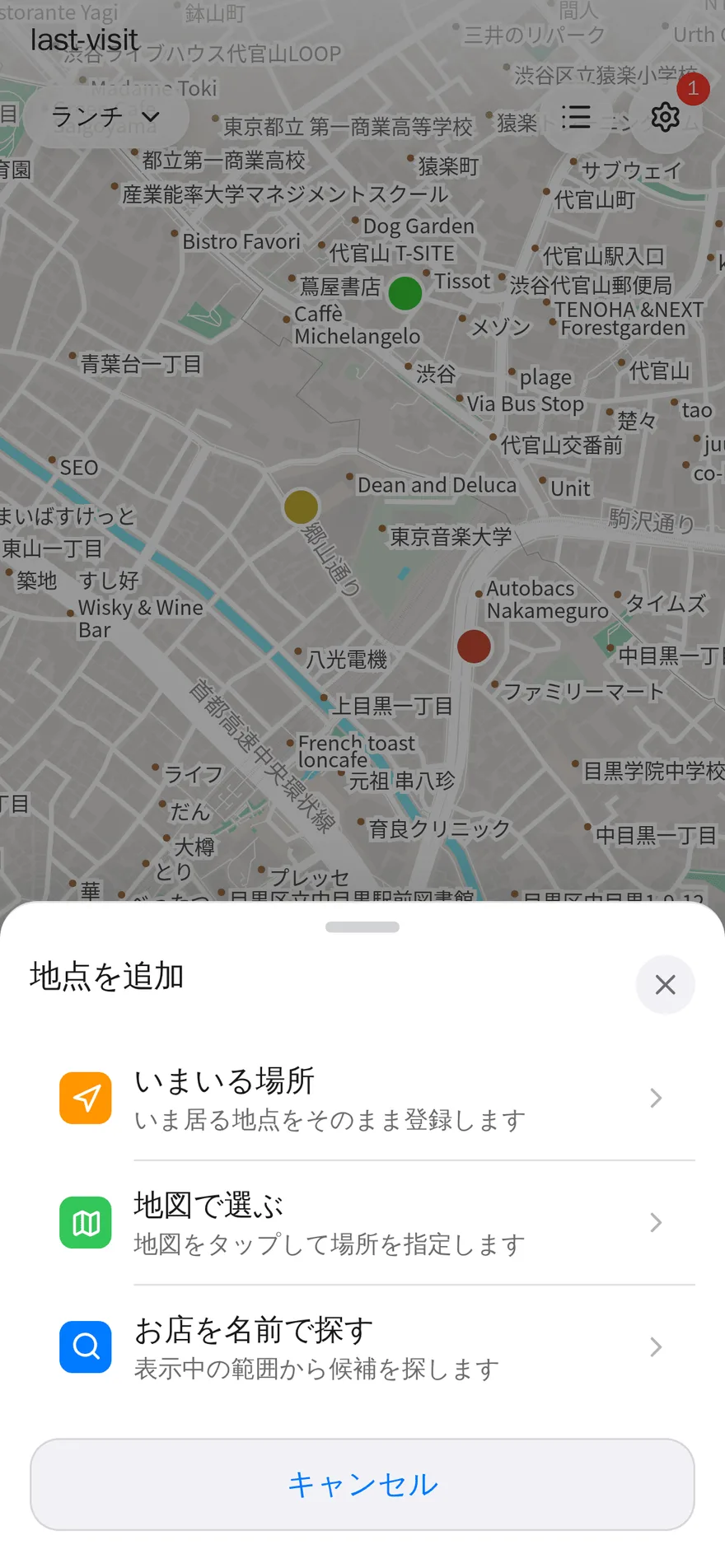
The app’s own screens say the same thing
What is kept where
Before handing your device to someone else, you can clear all of this at once with “Erase from this device and sign out” under “Settings → Account.” Offline maps stay, so delete them by prefecture under “Settings → Offline maps”
These are companies that look up addresses and shop names for us. It’s our server that asks them, and what reaches them is the location and the search words or category you entered. Your IP address doesn’t reach them. What they’re asked is normally deleted within a day
What doesn’t stay with us
- Where you are now
- The places you looked at on the map
- Shops you searched for but didn’t pick
- Your credit card number (handled by the payment company, Stripe)
Line up shops and dates, and you can see roughly how someone lives. That’s why we keep nothing more about where you go.
We don’t just say so. Once, we found that our delivery infrastructure had been automatically inserting an analytics script, and we shut it off the same day. To confirm it was gone, we deliberately switched the inserting side’s setting back, loaded the page 18 times and checked that it appeared 0 times.
It also appears in Google Play’s “Data safety”
A Google Play store page lists what an app collects and where it sends it, as declared by the developer, under “Data safety.” The same content appears there, in a place we didn’t build.
That said, Google hasn’t checked and guaranteed it. What we declared simply appears as is, and Google Play itself says so right there. It’s still worth a look, because doing anything other than what we declared would violate Google’s policy.
One thing is counted differently, so we’ll mention it up front. Under Google’s rules, passing data to contractors that process it on our instructions doesn’t count as “sharing with third parties.” That doesn’t mean nothing reaches the “outside companies” above. It’s the same thing, counted another way.
If you’d like to know more
Are you watching where I am?
No. The app knows where you are only when you press the round button on the map, and at launch if you’ve turned on “Go to current location on open” (it starts out off). Each is a one-time reading, and there’s nowhere in the app to keep it.
However, if you register a shop from “Where I am now,” that spot is saved as the shop. That happens only when you give it a name and press save.
Can the places I go ever leave the app?
Only in two situations: when you open a shop’s registration screen, and when you use “Search shops.” To fill in names and addresses automatically, we ask an address lookup company (Geoapify, Germany) about that location. What they’re asked is normally deleted within a day, and the company states that it doesn’t sell or rent it to anyone else.
We ask as soon as the registration screen opens, so even if you change your mind and close it, the question has already been asked.
Browsing the map, recording the date you went and viewing the list don’t send anything out.
What stops working if I don’t allow location access?
Only the distances in “Nearby and due.” Registering shops, recording visits, sharing and the map all work as usual without permission.
Does signing in tell Google or Apple anything?
The fact that “this person started using this app” stays with whichever you signed in with (Google or Apple). That can’t be avoided when you use their sign-in.
All we receive is your email address and an identifier to tell accounts apart. We don’t get your password, your name or your photo. There are no Google or Apple components on the app’s screens, so neither of them can see what you do after signing in.
The official rules are in the privacy policy
This page restates the privacy policy in plain words. What we collect, what it’s used for, who it’s entrusted to and when it’s deleted are all there. If anything differs, treat the policy as correct.
Sales terms such as price and availability are summarized in the Legal notice (Japanese).
Want to know when the English version is out?
For now, last-visit is in Japanese and available in Japan only. We’ll announce the English version on X (posts are in Japanese).
Links
-
Back to the last-visit page What the app does, platforms and pricing.
-
Privacy (this site) About this introduction site you’re reading now. It’s written separately from the app.
-
Contact If something you’re wondering about isn’t covered here, just ask.